
Portugues
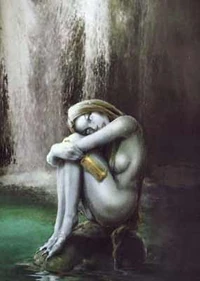
No folclore basco, as lamiak (singular, lamia) são descritas como belas mulheres de pés de pato, garras de ave ou rabo de peixe. Moram nos ríos e fontes, onde costumam pentear suas longas cabeleiras com cobiçados pentes de ouro. Às vezes, têm filhos com eles. Algumas lendas dizem que são a deusa Mari.
O nome parece estar relacionado ao das vampirescas lâmias gregas, mas as lamiak bascas são entidades relativamente benignas, mais semelhantes às ninfas gregas ou às janas do folclore mediterrâneo. Normalmente amáveis, diz-se que ajudaram os homens a construir dólmens e pontes, mas enfurecem-se se lhes são roubados os pentes. Diz uma lenda que uma mulher roubou o pente de uma lâmia e esta começou a amaldiçoá-la, mas não o conseguiu porque o soar dos sinos da igreja salvou a mulher.
Outra lenda fala de um pastor que ouviu um canto maravilhoso e, ao segui-lo, encontrou um bela jovem sentada sobre uma rocha, que passava um pente de ouro sobre seus cabelos loiros, que lhe chegavam aos pés. Ao ver o rapaz, mergulhou n'água, mas depois reapareceu.
O pastor apaixonou-se pela jovem e a visitou dias seguidos, até que ela o pediu em casamento. O rapaz aceitou e ela lhe deu um anel. Ao chegar em casa, porém, não sabia dizer como se chamava a noiva ou quem eram seus pais, apenas que era formosa, formosa...
A mãe suspeitou de que o filho estava enfeitiçado e pediu conselhos a parentes e vizinhos, que lhe disseram que se fosse estrangeira tal coisa, se fosse bruxa outra... E o mais velho da aldeia disse que, se fosse uma lâmia teria pés de pato.
A mãe fez o filho prometer que prestaria atenção nos pés da moça. Ele imediatamente foi vê-la e a encontrou n'água, mergulhando e brincando com os peixes, mas desta vez reparou nos pés, e eram pés de pato.
Voltou para casa de coração partido, pois humanos não se casavam com lâmias. Adoeceu e delirou com a febre, vendo o rosto da amada e ouvindo sua voz chamando-o :”Zatoz,maitea,zatoz” (”Vem, querido, vem”).
O rapaz acabou morrendo. No dia de seu enterro, a lâmia apareceu em sua casa, cobriu-lhe o corpo com um lençol de ouro e beijou-lhe os lábios. Seguiu o cortejo até a porta da igreja, onde não podia entrar por ser solo consagrado. Retornou então às montanhas e tanto chorou por seu amor perdido que brotou ali um manancial que recorda o amor impossível entre a lâmia e o pastor.
English
In Basque folklore, the lamiak (singular, lamia) are described as beautiful women of fins, claws of bird or fish tail. They live in rivers and fountains where often combing their long wigs with coveted golden combs. Sometimes they have children with them. Some legends say they are the goddess Mari.
The name seems to be related to the vampire lamias Greek, but lamiak Basque entities are relatively benign, more like the Greek nymphs or to janas Mediterranean folklore. Normally friendly, it is said that the men helped to build bridges and dolmens, but rage if they are stolen combs. A legend says that a woman stole the comb of a lamia and this began to curse her, but failed because the sound of church bells saved the woman.
Another legend tells of a shepherd who heard a song and wonderful, to follow him, he met a beautiful young woman sitting on a rock, passing a comb of gold on his blond hair, which arrived at the feet. Seeing the boy, plunged into the water, but then reappeared.
The pastor fell in love with young and visited consecutive days, until she proposed. The boy accepted and she gave him a ring. Upon arriving home, but could not tell what it was called the bride or who his parents were, it was just beautiful, beautiful ...
The mother suspected that her son was bewitched and asked for advice from relatives and neighbors, who told him that if it was such a foreign thing, it was another witch ... And the elder of the village said that if it were a lamia have fins.
Her mother made her son promise that we would watch the girl's feet. He immediately went to see her and found her in the water, diving and playing with the fish, but this time noticed the feet, and were fins.
He returned home heartbroken because humans did not marry with lamias. Ill and delirious with fever, seeing the face of the beloved and hearing his voice calling him: "Zatoz, Maitea, zatoz" ("Come, dear, come").
The boy died. On the day of his funeral, the lamia appeared in his house, covered his body with a sheet of gold and kissed her lips. Followed the procession to the church door, where he could not get by being consecrated ground. He then returned to the mountains and both wept for his lost love that blossomed there a spring that recalls the impossible love between a shepherd and lamia.

Nenhum comentário:
Postar um comentário